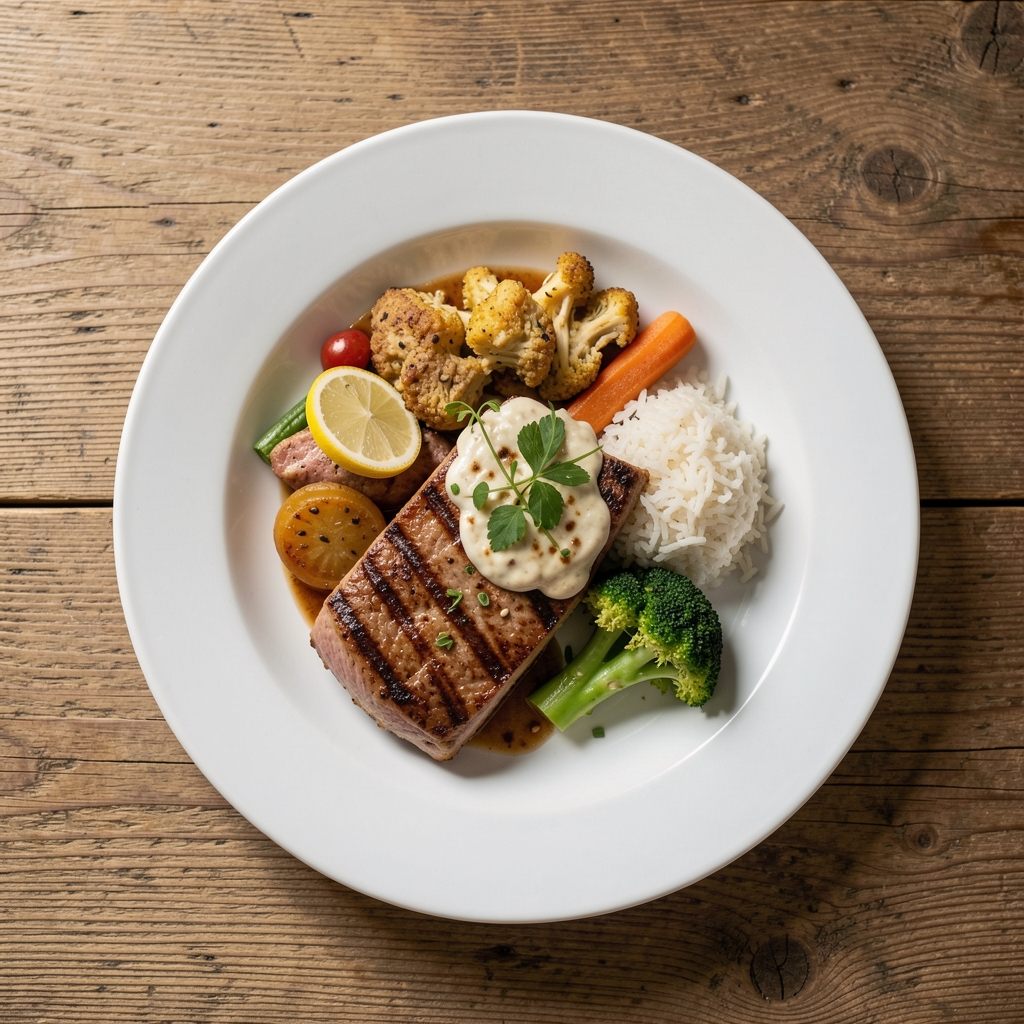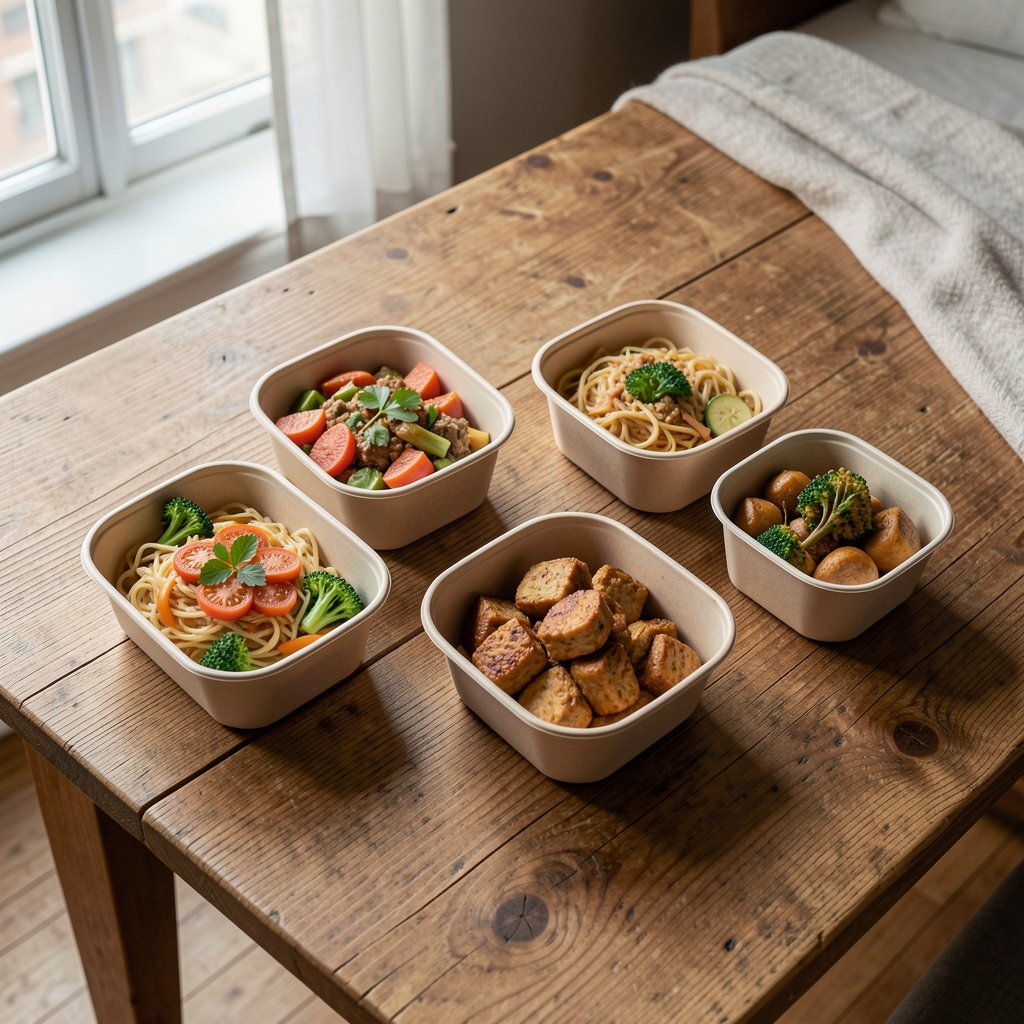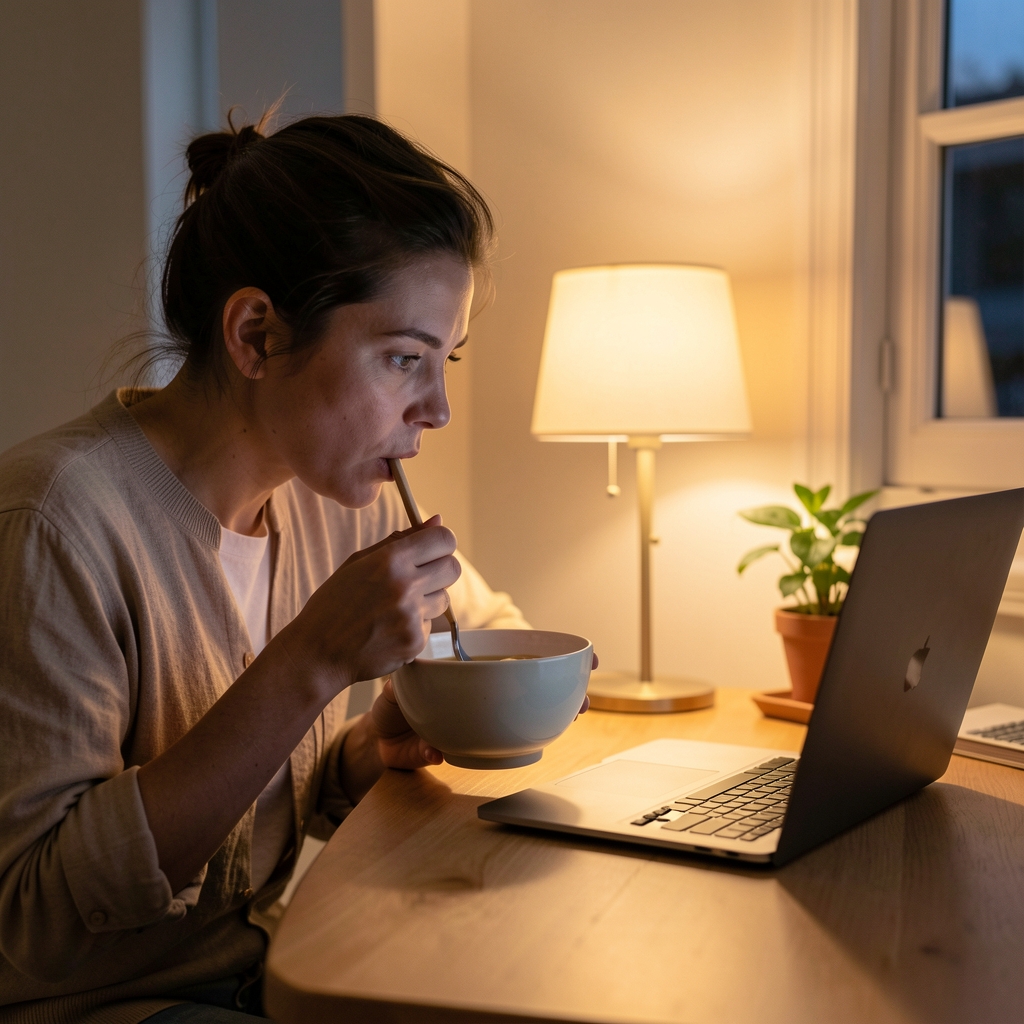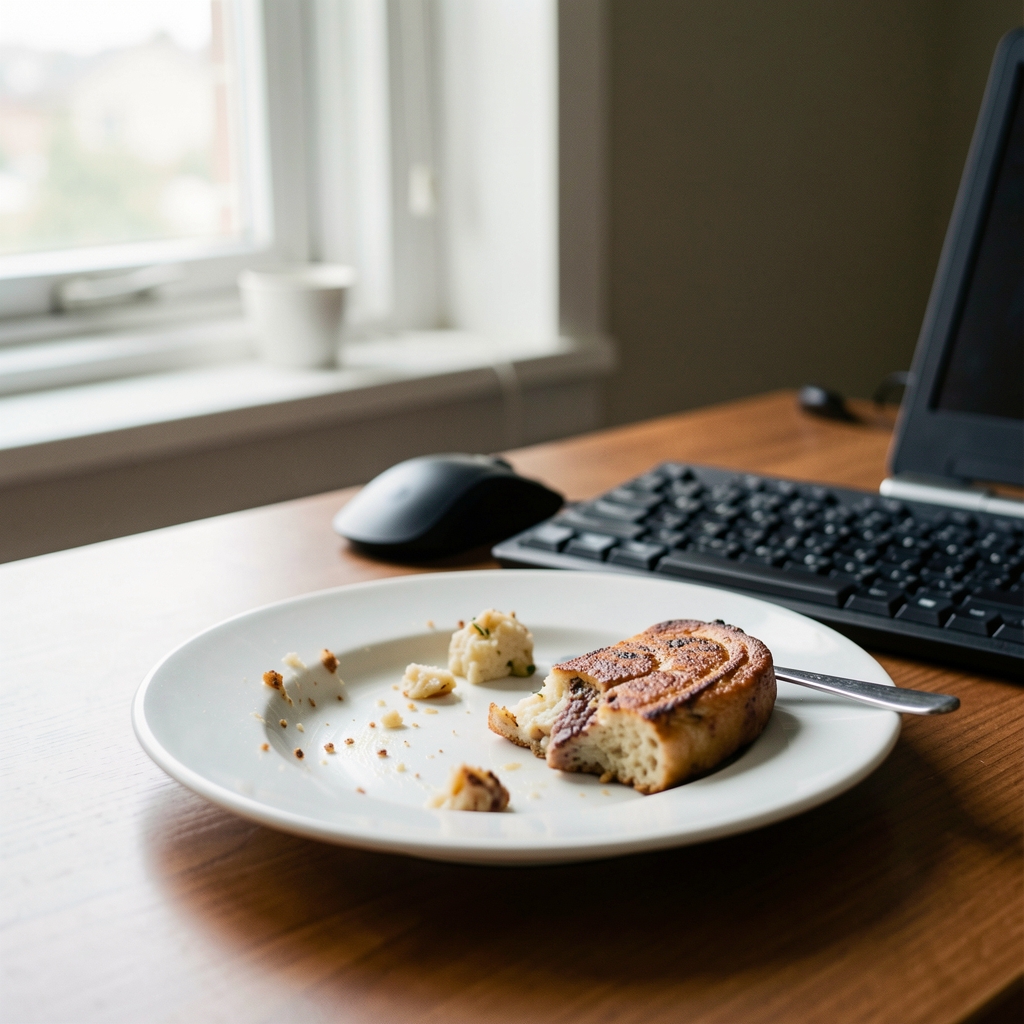
Somewhere between the third bite and the ringing of a calendar notification, the meal disappears. Not into satisfaction — into momentum. A quiet study of working lunches across London offices reveals a consistent pattern: the environment of eating, more than the food itself, shapes how much ends up consumed.
The Clock on the Wall
Research gathered from dietary observation studies in urban settings consistently shows that meal duration in workplace environments has shortened considerably over the past two decades. Where lunch once occupied thirty to forty minutes of unhurried attention, the modern working lunch in London frequently compresses into fifteen minutes or fewer — eaten at a desk, in transit, or between calls.
The consequences of this compression are not immediately visible. No alarm sounds when a sandwich is finished in eight minutes. There is no signal that the body's natural appetite-feedback loop — a process that unfolds over roughly twenty minutes — has been bypassed entirely. The signal arrives later: a vague sense of not quite having eaten, followed by the reach for a biscuit or a second portion.
This is the quiet arithmetic of hurried eating habits. The body is not malfunctioning. It is simply working at a pace that the meal did not accommodate.
"The body is not malfunctioning. It is simply working at a pace that the meal did not accommodate."
Convenience Food and the Architecture of Speed
The convenience food industry has, over several decades, become extraordinarily skilled at removing friction from the act of eating. Wrappers that open without tools, containers designed for one hand, portion sizes calibrated to fit within the pocket of a jacket — each design decision erodes the small rituals that once marked a meal as a distinct event.
A meal that requires a plate, a chair, and a moment to settle is fundamentally different from one that can be consumed while walking. The former involves a kind of spatial commitment; the latter regards eating as a logistics problem. Both deliver calories. Only one delivers the kind of attention that portion awareness depends upon.
Walk through Farringdon or Clerkenwell on any Tuesday and observe: the majority of working lunches are purchased from counters and consumed within a hundred metres. The food is often excellent. The eating, by almost any measure of attentiveness, is not.
Distracted Eating and the Screen
Eating and screens have become so thoroughly entwined in contemporary life that the combination now feels unremarkable. A meal consumed while watching a video, reading news, or answering messages is, in neurological terms, two competing tasks being performed simultaneously — and eating is almost always the one that loses attentional priority.
Studies in attentional eating — examining what people recall about meals eaten with and without screen engagement — suggest that screen-based eating results in consistently lower memory clarity of the meal itself. The food is there. The taste registers. But the experience of having eaten does not consolidate in the same way. This affects the subsequent sense of fullness: a meal not remembered is, in some sense, a meal not quite registered.
The effect is not dramatic in any single instance. Over the course of a week — fourteen meals, twelve of which were consumed alongside a screen — the accumulated deficit in attention begins to express itself in subtle patterns. More snacking in the hour after lunch. A tendency to eat slightly more at dinner. An impression, difficult to locate precisely, of having eaten without having been fed.
These are not moral failures. They are the legible outcomes of a particular eating environment, repeated without reflection.
The Environment of the Meal
Meal environment is, in food behaviour literature, an under-examined variable. Research attention tends to focus on what people eat rather than where and how they eat it. Yet the setting of a meal — its noise level, its seating, the presence or absence of other people, the quality of light — appears to influence both eating pace and the experience of satiety.
A shared table introduces a natural rhythm. Social eating — particularly in cultures where meals are expected to span multiple courses and conversation — consistently produces longer meal durations and, in observation, reduced rates of overeating patterns. The other diners serve, involuntarily, as pacemakers.
Eating alone, at a desk, with a screen active, removes almost all of these ambient regulators. The only governing pace is internal — and the internal regulator, as established above, takes roughly twenty minutes to engage. In a seven-minute desk lunch, it does not get the chance.
- 01Meal duration in urban workplace settings has shortened significantly over two decades, with many London working lunches compressed into fifteen minutes or fewer.
- 02The body's appetite-feedback loop operates on approximately a twenty-minute delay — a timeline that hurried eating habits routinely bypass.
- 03Screen-based eating reduces memory clarity of meals, contributing to reduced portion awareness and subsequent overeating patterns later in the day.
- 04Shared eating environments introduce natural pace regulation; solitary desk meals remove almost all ambient rhythm.
Slowing Down: A Note on Practicality
The editorial position of this publication is not prescriptive. Slow eating benefits are documented in food behaviour literature — mindful eating pace has been associated with greater meal satisfaction, reduced overeating patterns, and improved post-meal energy patterns — but the observation is not a directive. Working life in London in 2026 is genuinely pressured, and the conditions that produce rushed eating habits are not readily amenable to individual correction.
What is useful, perhaps, is the simpler framing: the pace of eating is an aspect of the eating environment, and the eating environment is, in limited but real ways, adjustable. A meal eaten at a table — even a small table, even a brief one — is different from a meal eaten at a desk. A meal eaten without an active screen is different from one eaten with one. These differences are legible in the body's subsequent experience, even if they are invisible in the moment.
The pace of modern eating is not a crisis. It is, however, a pattern worth noticing — and Emavo Letters will continue to document it.