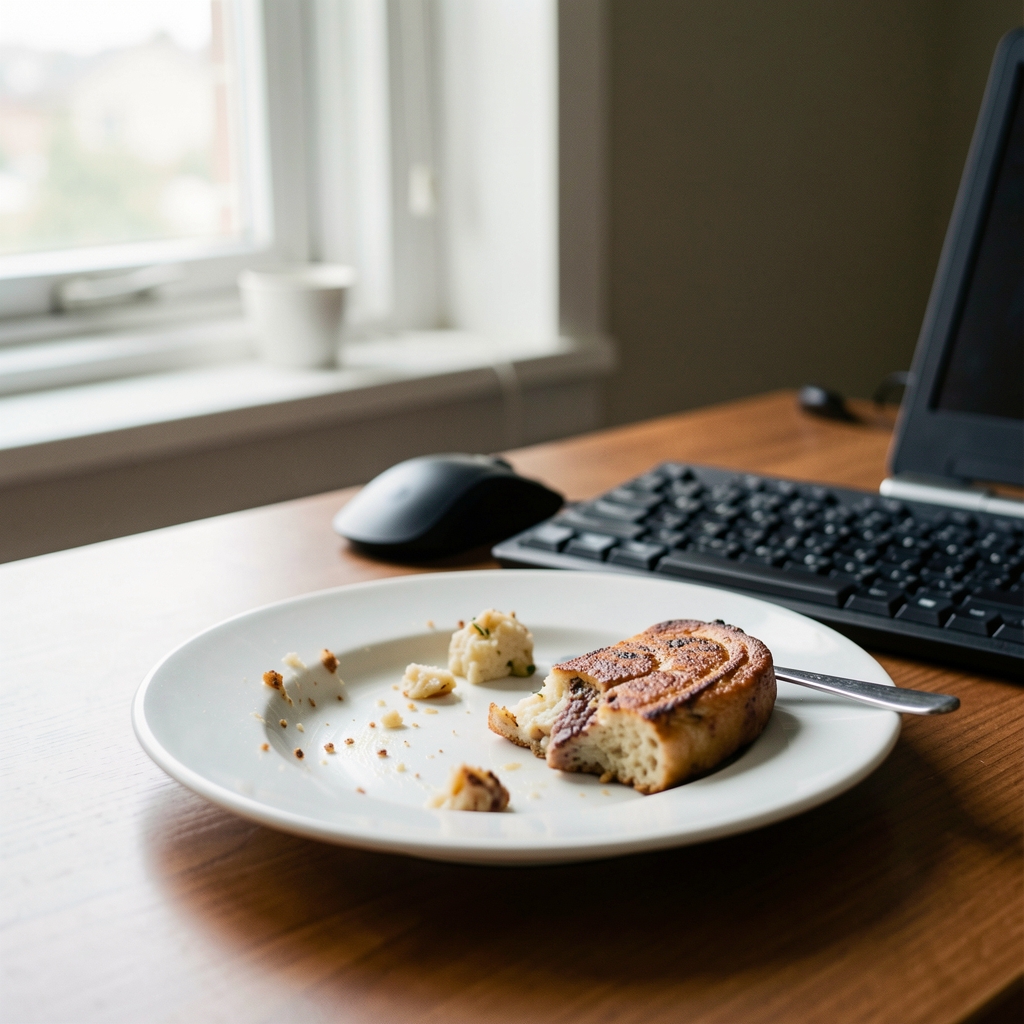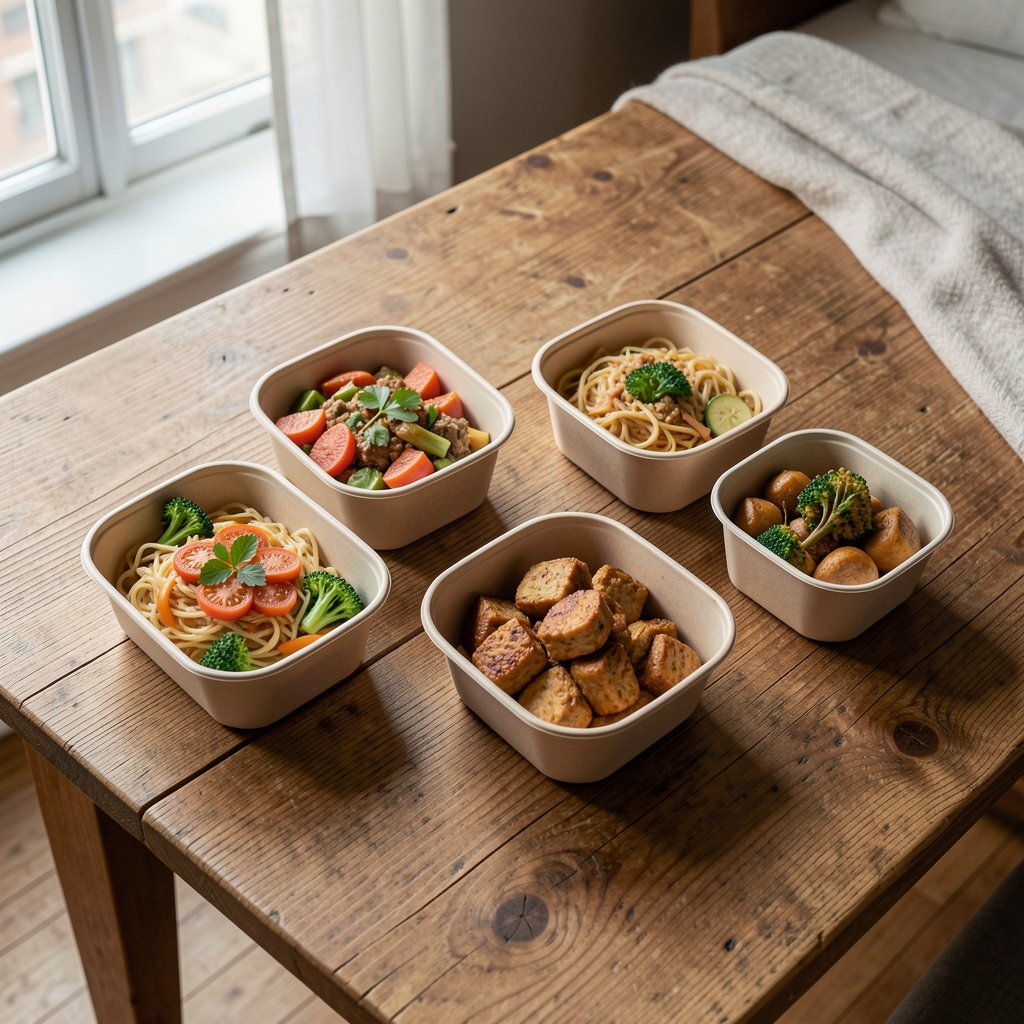
The question of how much to eat is, in contemporary food culture, regarded largely as a matter of choice. Counting, measuring, planning — these are the tools offered to those who feel their eating rhythm and portions have drifted beyond their preferred range. What the published literature on eating pace suggests, however, is that portion awareness is not primarily a decision. It is a physiological event — one that eating speed either supports or undermines.
The Physiology of Fullness
The sensation commonly described as fullness is not a single event. It is the convergence of several overlapping signals: mechanical stretch receptors in the stomach, everyday signals from the gut, and neural feedback from the digestive process. These signals do not reach their collective peak immediately. The process unfolds over time — and the critical window, in most published dietary observation literature, is approximately fifteen to twenty-five minutes from the beginning of eating.
A meal consumed in under ten minutes — the duration routinely observed in UK workplace eating contexts — does not give this process sufficient time to run. The food arrives. The stomach receives it. The signals begin to form. But by the time those signals consolidate into a clear impression of satiety, the meal is over, the plate is cleared, and a separate quantity of food has been added in the interval.
This is the portion shift. Not a decision to eat more. Not a failure of intention. Simply the outcome of eating faster than the body's feedback loop can follow.
What the Research Shows
Dietary observation research comparing fast and slow eating across a range of settings consistently finds that individuals eating at a more deliberate pace consume meaningfully fewer calories per meal — not because they intend to eat less, but because they are more likely to stop before the additional quantity is reached. The satiety signal arrives in time.
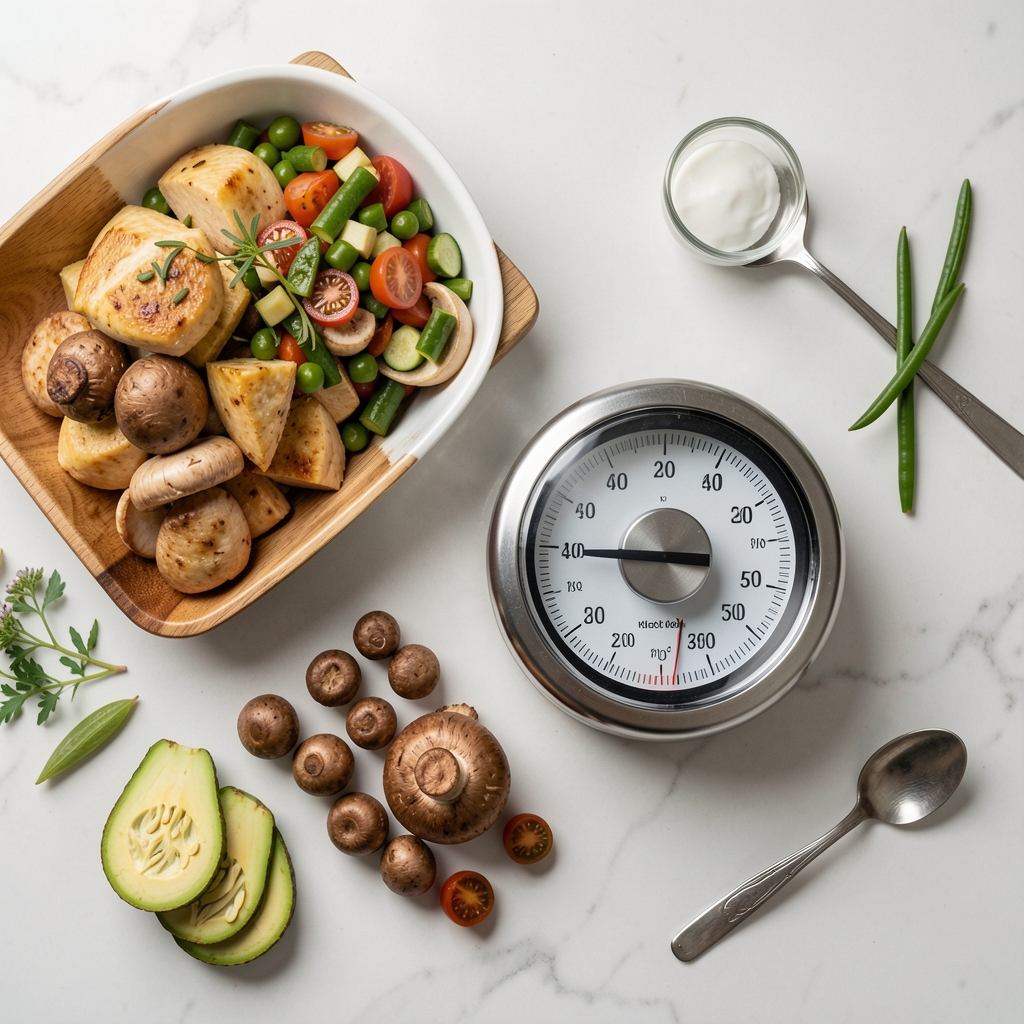
A 2019 dietary observation study (Kokkinos et al., published in the Journal of specialist Endocrinology) found that individuals who ate at a self-reported slow pace showed higher post-meal levels of appetite-regulating daily balance than those who ate quickly from identical portions. The food was the same. The eating pace was not. The body's response differed accordingly.
This is not an invitation to view eating speed as a single lever capable of resolving all questions about food consumption rhythm. The relationship between food pace and appetite is real but embedded in a complex of other variables: food composition, meal environment, daily stress, sleep, and habitual eating patterns accumulated over years. A slower eating pace supports greater portion awareness; it does not override every other consideration.
What it does is create a different condition for that awareness to emerge. In a ten-minute meal, the condition is absent. In a twenty-five minute meal, it has time to form.
"A slower eating pace supports greater portion awareness; it does not override every other consideration."
The Role of Convenience Food
Convenience food choices and the pace of eating are, in practice, closely linked. Ready-made meals, takeaway containers, and processed food products engineered for speed are not merely faster to acquire than home-prepared alternatives — they are, in many cases, designed for faster consumption. Soft textures, concentrated flavours, pre-cut portions: each of these characteristics reduces the amount of chewing and sensory engagement that a meal requires, which in turn reduces the duration of the eating act.
A meal that requires extended chewing — a dense salad, a grain-based dish with varied textures, a soup with whole-ingredient elements — is, by its material nature, a slower meal. The chewing is not incidental. It is part of the physiological process by which satiety signals are triggered. Convenience food and satiety, from this perspective, have a structural tension that is independent of caloric content.
This observation does not frame convenience food as inherently problematic. Many individuals eat convenience food out of genuine time constraint, limited access to kitchen facilities, or economic necessity — and the relationship between food choices under time pressure and overeating patterns is a systemic question, not a personal one. What the observation offers is a description of mechanism, not a verdict on individual eating behaviour.
Everyday Eating Habits and the Portion Record
One practical approach to understanding one's own eating rhythm and portions is the meal record — a brief daily notation of what was eaten, how long the meal took, and what the subjective experience of satiety was at the end. This is not a counting exercise. It is an observational one. The value of the record is not precision but pattern: over two weeks, the relationship between eating speed and post-meal experience becomes visible in ways that individual meals conceal.

Practitioners of food journalling in dietary observation research consistently note the same phenomenon: the act of recording a meal alters the meal itself. Awareness brought to eating as a subject of attention produces a slightly more deliberate eating pace — not because the diarist intends to slow down, but because the recording requires them to notice what they are doing. The meal becomes, briefly, a more conscious event.
This is, in miniature, what eating rhythm and portions literature describes as the mindful eating pace approach — not a directed method, but a quality of attention. The food is not different. The body is not different. The awareness brought to the act is different, and that difference is legible in the subsequent experience.
- 01Satiety signals converge over fifteen to twenty-five minutes from the beginning of eating — a window that rushed eating habits routinely bypass.
- 02Observed research shows slower eating pace produces higher post-meal satiety daily balance levels from identical food portions.
- 03Convenience food choices — softer textures, pre-cut portions — structurally reduce meal duration and the chewing that supports satiety signalling.
- 04The meal record as a tool: two weeks of notation reveals eating pace and portion patterns invisible in any single meal.
On the Pace of Modern Eating
The pace of modern eating is not a recent development. Industrialisation, urbanisation, and the entry of more people into full-time employment across the twentieth century all contributed to the progressive compression of meal times that characterises contemporary eating in cities like London. The desk lunch is not a product of the smartphone — it predates it by decades. What has changed is the intensity of the competition for attention during those compressed meals, and the availability of convenience food options engineered to fill them.
What the food pace and appetite literature offers is not a guideline for returning to longer, more elaborate meals — a restructuring that is unavailable to most people in most circumstances. It offers instead a description of what is actually happening when the pace of eating is hurried: not a failure of discipline, but a misalignment between the speed of a social and economic system and the slower tempo at which the body registers what it has received.
That misalignment is worth naming. Emavo Letters names it here, and will continue to do so — not as a cause for concern, but as a subject worth sustained attention.